Sign Language vs Text-Based Communication: What Works Best?
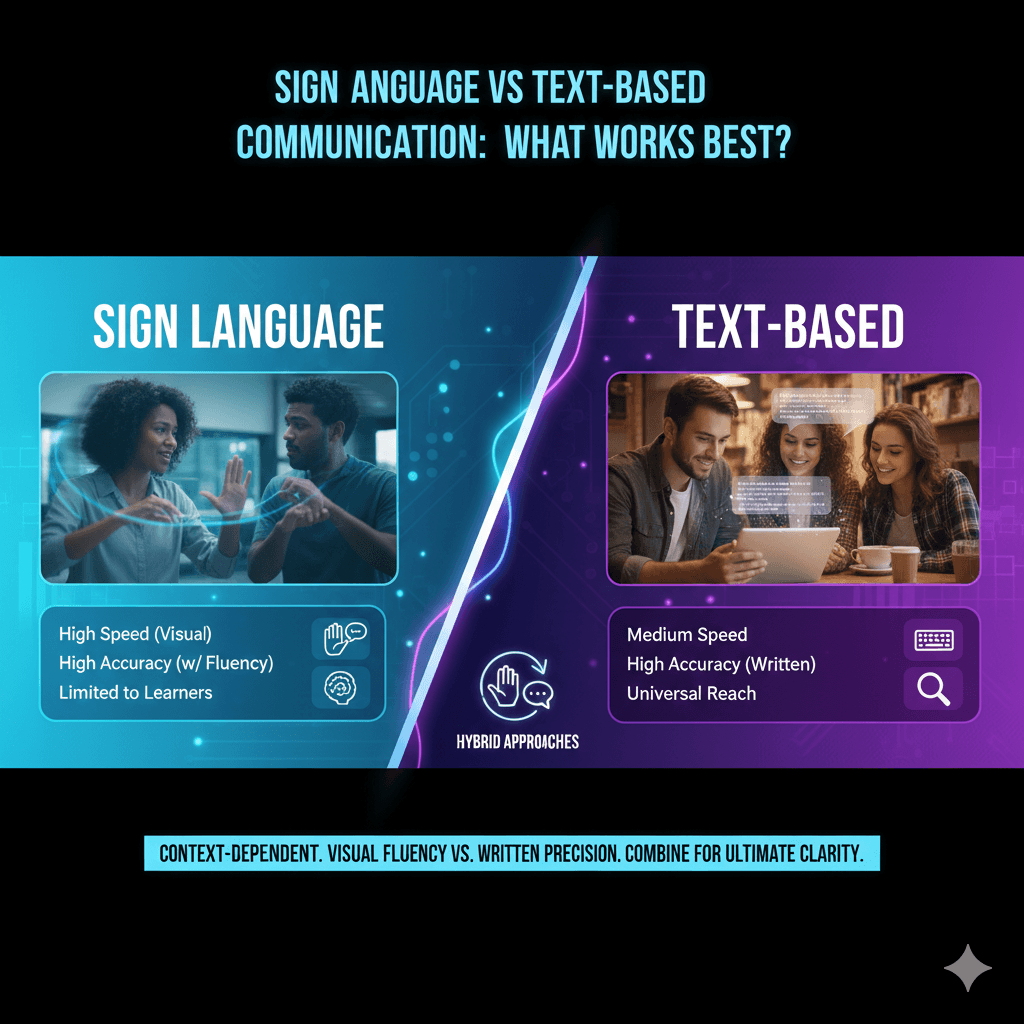
Sign language excels in speed and emotion for deaf-mute users; text offers accuracy and broad reach. Compare pros, cons, and hybrid approaches for effective communication.
Editorial Team
March 9, 20261 min read
Direct Answer
Sign language is faster for visual fluency (90%+ accuracy in ASL) and conveys tone; text-based is more precise for non-visual contexts but slower.
Communication Science
Sign integrates grammar via movement; text relies on words alone, missing non-manuals. Studies show sign intelligibility ties to accuracy and mouthing.
Pros and Cons Table
| Method | Speed | Accuracy | Accessibility |
|---|---|---|---|
| Sign Language | High (visual) | High w/ fluency | Limited to learners |
| Text-Based | Medium | High (written) | Universal |
Use Cases
Sign for in-person emotion; text for async or hearing interactions. Hybrids like video text overlays work best.
Tips
- Combine: Sign + captions. - Practice accuracy for sign. FAQ: Best overall? Context-dependent. Link: phone tools. References: Signing Accuracy Study