Are Mute People Also Deaf? Clearing the Most Common Myth
No, muteness and deafness are distinct conditions, most mute people have normal hearing. This detailed myth-buster explores differences, origins of confusion, and tips for respectful awareness.
Editorial Team
The Myth: Not True for Most
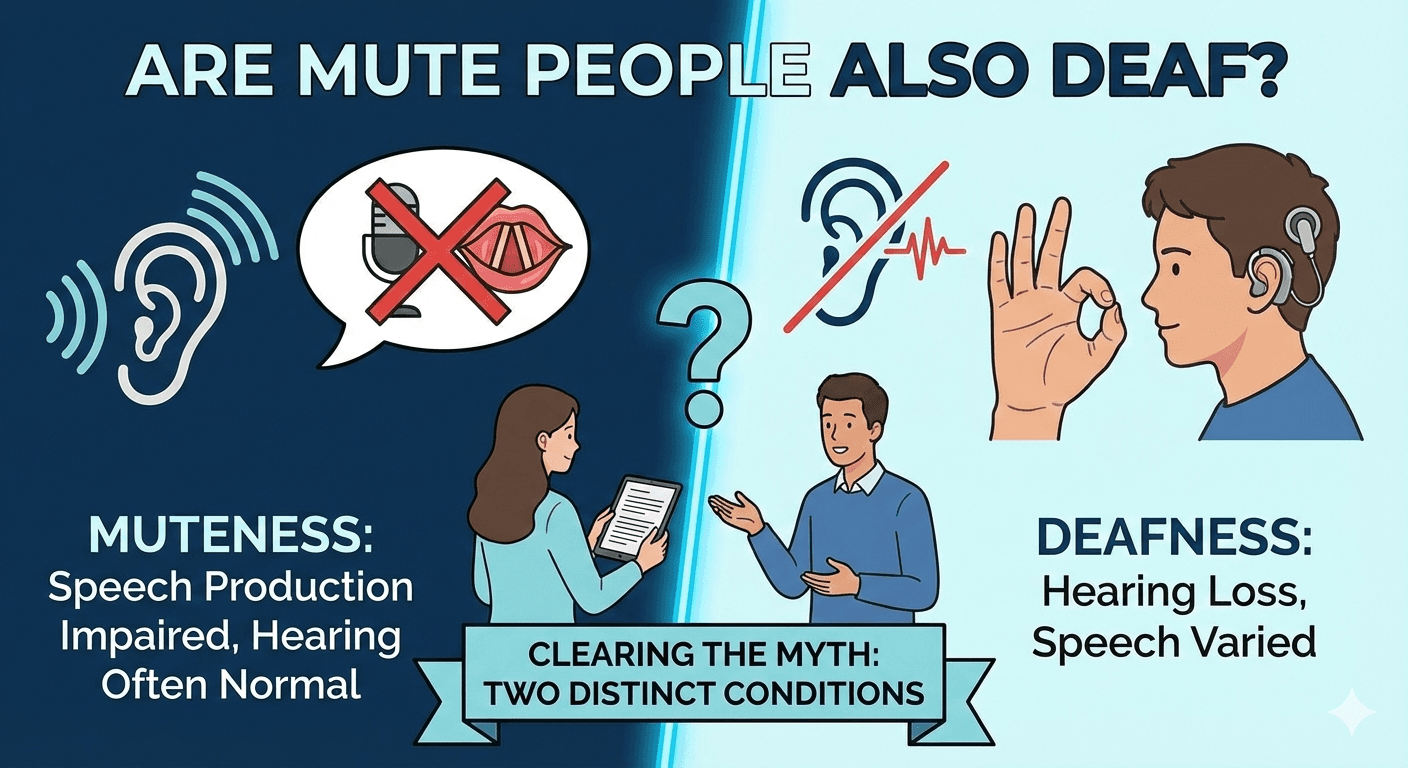
Muteness specifically impairs speech production, while deafness involves hearing loss; they are medically separate, with many mute individuals hearing perfectly and relying on auditory cues in conversations. The outdated 'deaf-mute' label stems from historical observations of deaf children who, without sound input, struggle to develop spoken language, but this is not universal.
Clearing this misconception promotes accurate understanding and reduces stigma.
Core Differences in Detail
Physical mutism targets the vocal tract, issues like vocal cord nodules, surgeries, or neuromuscular diseases affect outgoing sound only. Selective mutism is psychological, rooted in anxiety disorders, leaving hearing intact and often allowing private speech.
Deafness, by contrast, may lead to atypical speech patterns due to lack of auditory feedback, but many deaf people speak using lip-reading, residual hearing aids, or cochlear implants.
Origins and Real-World Effects
The association arose in eras when deaf education was limited, leading to assumptions that no hearing meant no speech. Today, this myth hinders inclusion, as it overlooks mute professionals thriving in hearing environments.
Challenging it enhances empathy, a cornerstone of personal evolution.
Practical Respect Guide
- Avoid assumptions: Never presume hearing status, ask directly and politely.
- Use inclusive language: Say 'nonverbal' or 'uses sign language' instead of stereotypes.
- Build skills: Learn basic signs or apps to connect meaningfully, growing your adaptability.
Awareness like this dismantles barriers, enriching interactions.