Can Mute People Speak Again? Is It Ever Possible?
Recovery from mutism is possible for many through therapy, surgery, or adaptation, though outcomes vary by cause, no guarantees, but real hope exists. This balanced look at treatments empowers realistic support and understanding.
Editorial Team
Hopeful Reality: Yes for Many, With Nuances
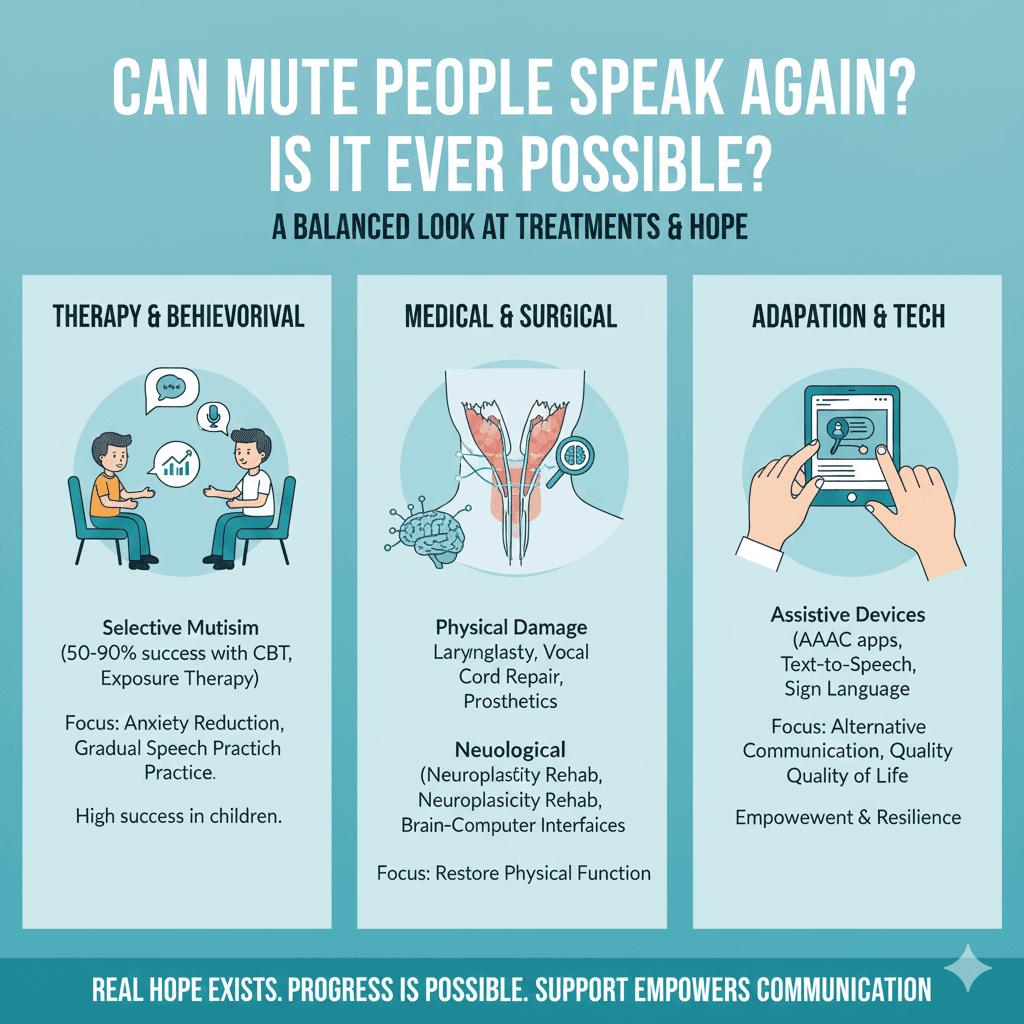
Whether mute individuals can regain speech depends on the root cause, physical repairs via surgery succeed in vocal cord cases, while behavioral therapies yield high remission rates for selective mutism. Think of it like rebuilding a bridge: some structures mend easily, others need new paths altogether.
No false promises here; success rates hover around 50-90% with tailored interventions, emphasizing steady progress over miracles.
Therapy and Treatment Paths
For selective mutism, cognitive behavioral therapy (CBT) and exposure techniques show recovery rates of 56-92% long-term, especially when started young. Physical mutism benefits from speech therapy, prosthetics, or surgeries like laryngoplasty.
Neurological cases use neuroplasticity-focused rehab, with tech like brain-computer interfaces aiding breakthroughs.
Assistive Lifelines and Adaptation
Even without full recovery, AAC tools and sign language offer 'voice,' boosting confidence and life quality [ from prior]. Personal stories abound of mute folks thriving via tech, proving adaptation is victory.
This journey builds resilience, for them and supporters.
Realistic Steps Forward
- Seek pros: SLPs, psychologists early.
- Track progress: Small wins matter.
- Support holistically: Emotional backing key.
Recovery teaches patience, turning challenges into growth. Long-term outcomes of selective mutism, Treatment of selective mutism: a 5-year follow-up.