Can Mute People Laugh, Cry, or Make Sounds?
Yes, most mute people can laugh, cry, cough, and produce reflexive sounds distinct from structured speech. Delve into the science of emotional vocalization and its role in human connection.
Editorial Team
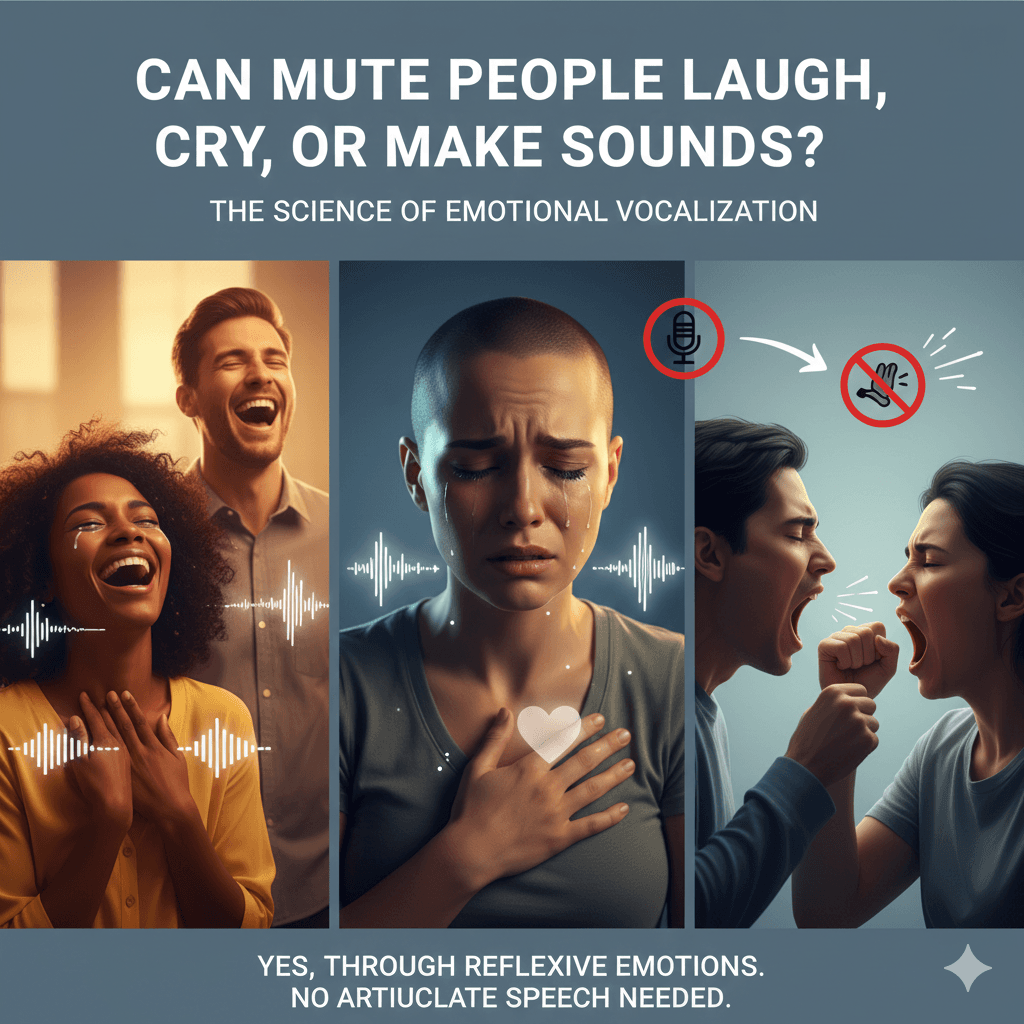
Answer: Yes, Through Reflexes
Laughter, crying, sighs, and grunts rely on involuntary diaphragm contractions and basic vocal cord vibration, bypassing the precise neural pathways needed for articulate speech. These preserve full emotional range, often more raw and authentic than words.
In selective mutism, such sounds emerge freely in safe spaces, highlighting context over capability.
The Physiology Explained
Speech demands coordinated brain regions (Broca's and Wernicke's areas) for syntax and phonation; emotions activate the limbic system for primal outbursts. Even with vocal damage, air expulsion creates whoops or gasps; full paralysis mutes volume but not facial joy or tears.
This separation underscores emotions' universality.
Everyday and Cultural Insights
Mute individuals laugh silently with shoulder shakes or audible chuckles if cords allow, cry with heaving sobs, and cough reflexively for airway clearance. Culturally, these non-verbal cues bridge gaps, vital in sign-dominant communities.
Observing them enriches empathy.
Growth Through Recognition
- Laugh: Diaphragmatic bursts, often visual or exhaled.
- Cry: Tearful exhalations with moans.
- Other sounds: Yawns, screams, hums, instinctive survival tools.
Appreciating these affirms shared humanity, honing emotional intelligence for life's relationships.